
Nearly 90 per cent of the stocks comprising the National Stock Exchange Nifty 500 Index and 49 of the 50 stocks that make up the Nifty50 are trading above their respective 200-day moving averages (DMAs). The 200-DMA is considered one of the most relevant trend indicators by investors and traders. They believe that stocks and indices trading above this key level exhibit strength and are likely to rally, while those trading below this level are viewed as bearish, with the stock/index expected to see a selloff.

The number of dematerialised (demat) accounts required to hold shares and other securities in electronic format rose by 3.1 million in April, bringing the total tally to a fresh record of 154.5 million. Since December last year, the new additions have consistently remained above the 3 trillion mark, a sign that the stock markets continue to attract new investors despite a spike in volatility.
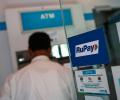
Recent RBI data indicates net addition of credit cards is running strong at 18 per cent year-on-year (Y-o-Y), but growth in credit card limits is ahead of loans outstanding. Growth in lower limit cards is decelerating fastest. The West and South have more usage and online transactions are more popular than offline, with metros leading growth.

From the Sensex pack, IndusInd Bank, NTPC, Asian Paints, Hindustan Unilever, JSW Steel, Tech Mahindra, Bajaj Finance, Infosys, Wipro, ICICI Bank, Bajaj Finserv, HDFC Bank and Tata Motors were among the major laggards. HCL Technologies, Power Grid, Titan, Reliance Industries, UltraTech Cement, Tata Steel, State Bank of India and Mahindra & Mahindra were the gainers.

Wholesale price inflation remained in the negative territory for the fourth month in a row in July at (-)1.36 per cent, even though prices of food items, especially vegetables, skyrocketed. The inflation, however, has inched up from (-)4.12 per cent recorded in June fuelled by 62.12 per cent rise in vegetable prices. In July last year, wholesale price index (WPI) was 14.07 per cent.

Walmart group firm Flipkart continues to dominate the e-commerce segment with 48 per cent market share while Softbank-backed Meesho has emerged as the fastest growing e-commerce platform in terms of user base in India, a latest report by AllianceBernstein said. According to the report, Flipkart's user base grew 21 per cent year-on-year (YoY), Meesho accelerated at 32 per cent while Amazon lagged at 13 per cent user growth primarily due to relative premium offerings as compared to peers. "As of FY23, Flipkart was the market leader, with a 48 per cent share in India eCommerce.

Since 2008, the Bureau of Energy Efficiency is running a star rating programme, under which electric equipment are rated according to their efficiency. This in turn helps the consumers save electricity.

From the Sensex pack, NTPC, Tata Motors, Larsen & Toubro, Bajaj Finserv, Bharti Airtel, HDFC Bank, Reliance Industries, Titan, Power Grid and State Bank of India were the major gainers. ITC, UltraTech Cement, Tech Mahindra, Tata Steel, Wipro, Tata Consultancy Services and JSW Steel were among the laggards.

The Reserve Bank of India on Thursday decided to keep policy rate unchanged for third time in a row as it maintains heightened vigil on inflation. The rate increase cycle was paused in April after six consecutive rate hikes aggregating to 250 basis points since May 2022.


The rising market poses a dilemma for investors on whether to continue buying, reduce equity holding, or exit equities altogether.

'Investors should look to incrementally allocate towards equity from a medium-to-long term horizon.'

India's flagship payment platform, the Unified Payments Interface (UPI), ended the 2022 calendar year on a high note as the volume of transactions touched a record 7.82 billion in December, amounting to Rs 12.82 trillion, again a record high. Data released by the National Payments Corporation of India (NPCI), the umbrella body for retail digital payments in the country, showed volume of transactions in December was up 7.12 per cent compared to November, while value of transactions was up 7.73 per cent during the same period.

The BSE Healthcare Index is up 19 per cent as compared to BSE Sensex returns of 11 per cent during this period. Nitin Agarwal of DAM Capital highlighted this trend in a report last month. "After a sustained period of underperformance over FY21-23, the BSE Healthcare Index has once again captured the spotlight. "The recent uptick in performance has been driven by hospitals and emerging green shoots in pharmaceutical exports, particularly to the US, along with sustaining momentum in domestic branded formulations," he said.

The argument that India is going towards a 'Hindu rate of growth' is "ill-conceived, biased and pre-mature" when weighed against the respective data on savings and investments, said SBI Research in its Ecowrap report. The term Hindu rate of growth was coined by economist Raj Krishna in 1978, which denoted the economic growth of about 3.5-4.0 per cent in terms of GDP during 1947-1980. "India's quarterly sequential Y-o-Y GDP growth has been in a declining trend in FY23.

Container Corporation of India (Concor) has been the worst performer among major logistics & port stocks registering returns of about 4 per cent over the past three months as compared to 10-12 per cent for peers Gateway Distriparks and Adani Ports and SEZ. Uncertain outlook on the export-import (EXIM) trade front, market share loss, lack of progress on divestment, and weak June quarter results weighed on the stock. Volume and margin movement will be key triggers for the stock going ahead. As was the case in the previous quarter, margin performance was muted even in the June quarter. Operating profit in the quarter was down 17 per cent at Rs 391 crore missing estimates by over 15 per cent. Operating profit margins at 20.4 per cent, too, were down sharply by 350 basis points over the year-ago quarter.

'The World Cup alone is expected to create an additional 100,000 jobs, most of which will comprise gig workers in the delivery space, transportation, hospitality and event management.'

The stocks of Mumbai-based real estate companies have been hitting lifetime highs on expectations that launches, steady demand, and price increases in the largest real estate market in the country would boost their financials. Macrotech Developers (Lodha) and Oberoi Realty hit their all-time highs last week, while Godrej Properties came close to its 52-week high last month before witnessing a sharp correction.

'Although mid- and small-cap funds have the potential for higher growth, they come with inherent higher volatility.'

Corporate margins and profits in India remain vulnerable to changes in crude oil prices in the international market. Historical quarterly data from listed companies (excluding banks, finance and insurance, oil and gas, and power sectors) indicate an adverse correlation between corporate margins and crude oil prices.

Gold prices hit record high in the third week of March as fears of bank collapses and high inflation led investors to the traditional safe haven. Gold prices are often inversely correlated to dollar strength because the international price is dollar-denominated. The Federal Reserve's (Fed's) stance indicates that the dollar may appreciate further since it is prepared to keep pushing up policy rates. But demand for gold is also up - the World Gold Council claims central banks are buying in addition to private demand.

N Chandrasekaran, chairman of Tata Consultancy Services (TCS) and Tata Sons, believes that the Digital India Act is a necessity. "The Digital India Act is a necessity because so much has changed over the decades since the original Information Technology (IT) Act was put in place. I am glad the government is developing a participative approach to developing the Digital Act," he said, while answering shareholders at TCS' 27th annual general meeting. Minister of State for Electronics and IT Rajeev Chandrasekhar a few months ago had said that the government would shortly roll out the Digital India Act - a renewed policy for the digital ecosystem and cyberspace in the country.

Among the sectors, the survey has projected IT, pharma and life sciences, and ITeS among those looking to effect the highest increase in salaries.

Despite rising interest rates, and high inflation, the banking sector is doing well, on the back of a recovering economy. The last couple of quarters indicate credit demand is picking up and Return on Assets (RoA) is more than acceptable at the moment. The PSU bank pack may be more interesting at the moment simply due to being valued at far lower multiples than the private banks.

Brokerages expect Nifty50 companies to have cumulatively witnessed strong double-digit growth in their earnings in the first quarter of FY24 (Q1FY24). This growth in the combined earnings is expected to have been driven by banks, automakers, and oil & gas companies. Other sectors may report muted profit growth.

'We have a plan to plough back a 'This year in the first half we had profits of more than Rs 31,000 crore.' significant amount of profits this financial year.' 'We have seen this organic plough back of profit is one of best ways to support the equity of the bank.'

The central government is likely to further consolidate its fiscal deficit by 50 basis points (bps) to 5.9 per cent in FY24 from 6.4 per cent in FY23, according to a recent report released by Goldman Sachs on Tuesday. In the current fiscal year, there is going to be an upside of 0.5 per cent on the receipts side due to higher nominal GDP growth, and higher tax buoyancy because of the formalisation, the report said. The upside to expenditure is mainly going to come from incremental subsidies (0.8 per cent of GDP), in both food and fertilizer, it said. The upcoming pre-election Budget will carry forward the trend of the increased capital expenditure seen in recent years.

'Instead of ACs, the government should do something to increase our salary.'

The situation could worsen if weather predictions of more rain in the capital and upper catchment areas come true.

Indian Oil Corporation (IOC), the nation's largest oil firm, has walked away with half of the natural gas that Reliance Industries Ltd and its partner bp of the UK offered in the latest auction of the fuel used to generate power, produce fertilizer, turned into CNG and used for cooking purposes. IOC got 2.5 million standard cubic meters per day out of the 5 mmscmd of gas auctioned last month, sources with knowledge of the matter said. The oil refining and marketing company, which was the top bidder even in the previous auction of gas from the eastern offshore KG-D6 block of Reliance-bp, bid the volumes on behalf of seven fertilizer plants.

In FY23, the State Bank of India (SBI) reported a 57.4 per cent jump in its net profit to Rs 55,684.17 crore. But the chairman of the country's largest bank, Dinesh Khara's annual pay for this creditable performance was just Rs 37 lakh (his peers at state-run banks are no better off). Look at his private bank rivals - most pocketed in excess of Rs 7 crore annually - plus stock options.

The early bird results for the January-March quarter of 2022-23 (Q4FY23) show a pick-up in earnings growth, despite a slowdown in revenue growth, thanks to a decline in input costs and lower provisioning for bad loans by banks. The combined net profit of 66 companies that have, so far, declared their quarterly results was up 15.2 per cent year-on-year (YoY) in Q4FY23, an improvement from 4.3 per cent YoY growth in Q3. Net sales growth of these companies, however, slowed down to 11.5 per cent YoY in January-March 2023, the slowest rate in eight quarters.

'India seems to be on a relatively better wicket compared to other emerging markets.'

The amount of money Indians invested in foreign securities, property, and deposits in 2022 was likely the highest on record. At $2.1 billion, it was the largest spend for any 12-month period according to the Reserve Bank of India's (RBI's) data going back over a decade. The amount spent for each individual segment was also the highest.

Is the worst over for Indian banks? The past two years saw them ride on treasury trades as deposits soared and credit growth dipped sharply. Gross and net non-performing assets (NPAs) moved south, and the provision coverage ratio (PCR), capital buffers, and profitability indicators are back at pre-pandemic levels. So, what's the plot ahead?

From the 30-share pack, Titan, Tech Mahindra, Maruti Suzuki India, Wipro, Nestle India, TCS, Larsen & Toubro, HCL Technologies, Tata Steel and HDFC Bank were among the major laggards. NSE Nifty declined 69.75 points to settle at 17,153.
Hospitals to recover from sluggish Q3; diagnostics' growth rate at pre-Covid levels.

The S&P BSE Auto Index has been one of the biggest outperformers among sectoral indices over the past year with returns of 26 per cent. By comparison, the benchmarks - the National Stock Exchange Nifty50 and the S&P BSE Sensex - managed about 6-8 per cent during this period. Improving demand, falling raw material costs, and rising product realisations, led by the premiumisation of portfolios, have led to a revision of growth estimates and upgrades by domestic brokerages.

'Job opportunities will be available in pharma, retail, medical, virtual business operating sectors, IT sector, telecommunications, infrastructure development, healthcare sector and e-commerce.'

Only five sectors such as consumer internet companies, professional services, life sciences, automotive and consumer products are projecting double-digit increment.
